WIM Tech Blog

EngineeringInsights

Sharing the latest technologies, hands-on experience, and in-depth insights in AI and Robotics.

Categories

Explore Topics

Latest Articles

Why Raising Friction Made Our Robot Turn Worse: The Geometry of Skid-Steer Scrub

Why Raising Friction Made Our Robot Turn Worse: The Geometry of Skid-Steer Scrub

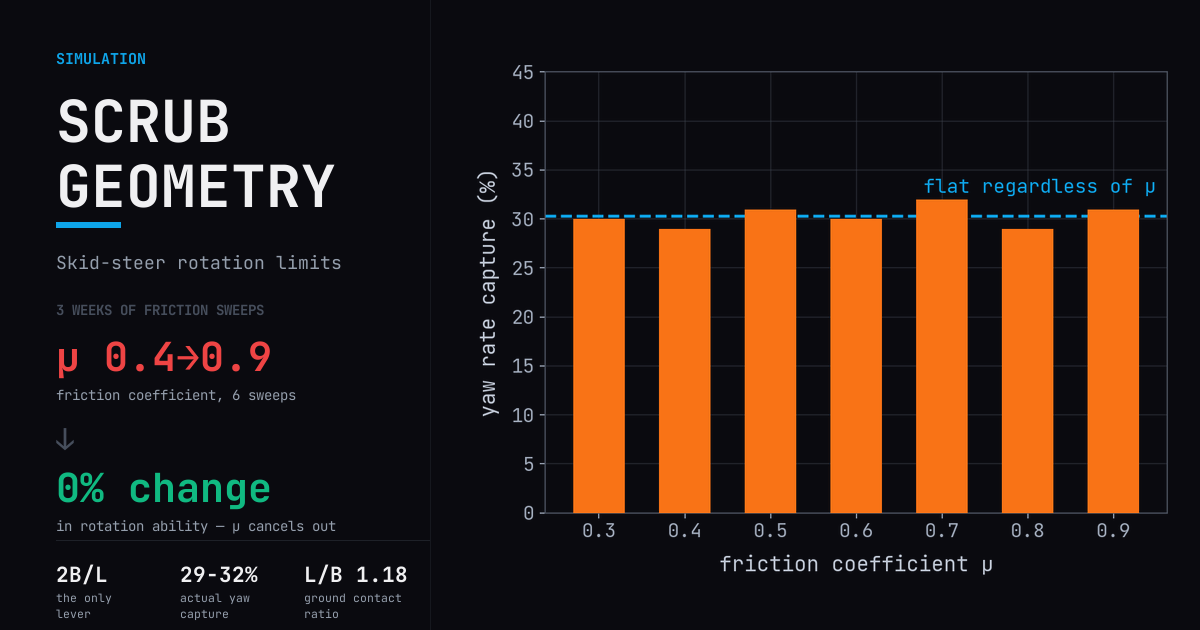
We derive why three weeks of friction-coefficient tuning was doomed from the start — in a skid-steer vehicle's turning-ability ratio, both the friction coefficient and the weight cancel out, leaving only contact geometry. With measured data, plus two hard-earned lessons about trusting simulation instrumentation.

Simulating a Tracked Robot: Why We Deleted the Tracks and Added 12 Invisible Wheels

Simulating a Tracked Robot: Why We Deleted the Tracks and Added 12 Invisible Wheels

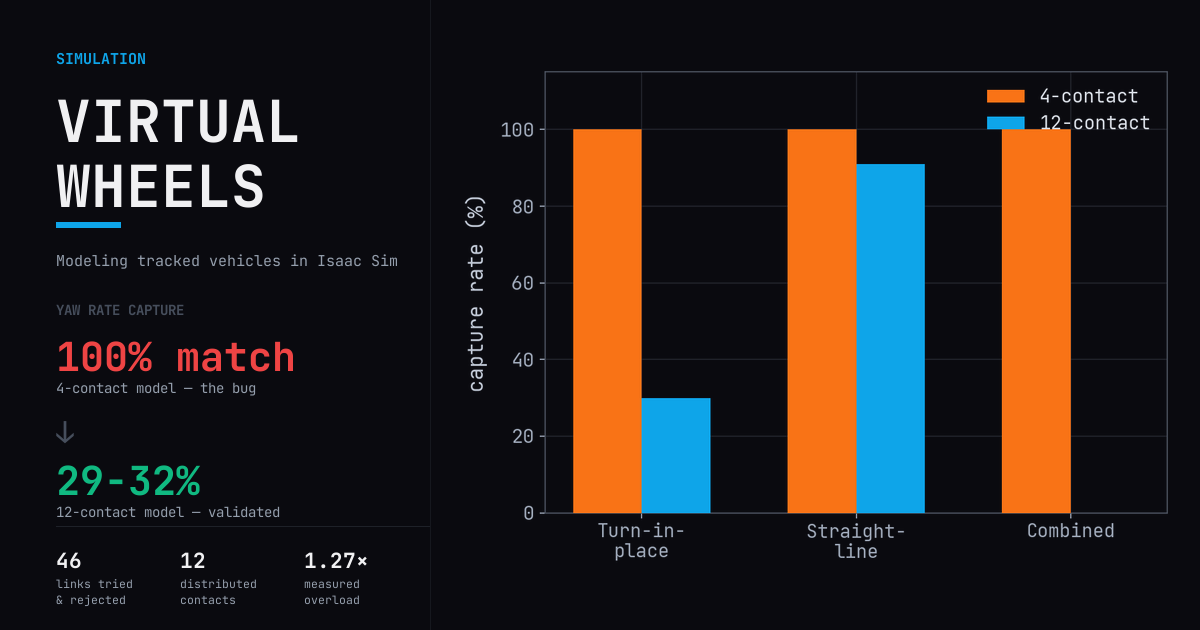
No physics engine has a native "track" primitive. We share how we modelled a tracked skid-steer robot in Isaac Sim — the failure of a 46-link articulated track, a 4-contact model that turned "perfectly" and was wrong precisely because of it, and the measured 12-contact distributed virtual-wheel model we use today.

RL-Based Low-Level Motor Control: Beyond PID/ADRC

RL-Based Low-Level Motor Control: Beyond PID/ADRC

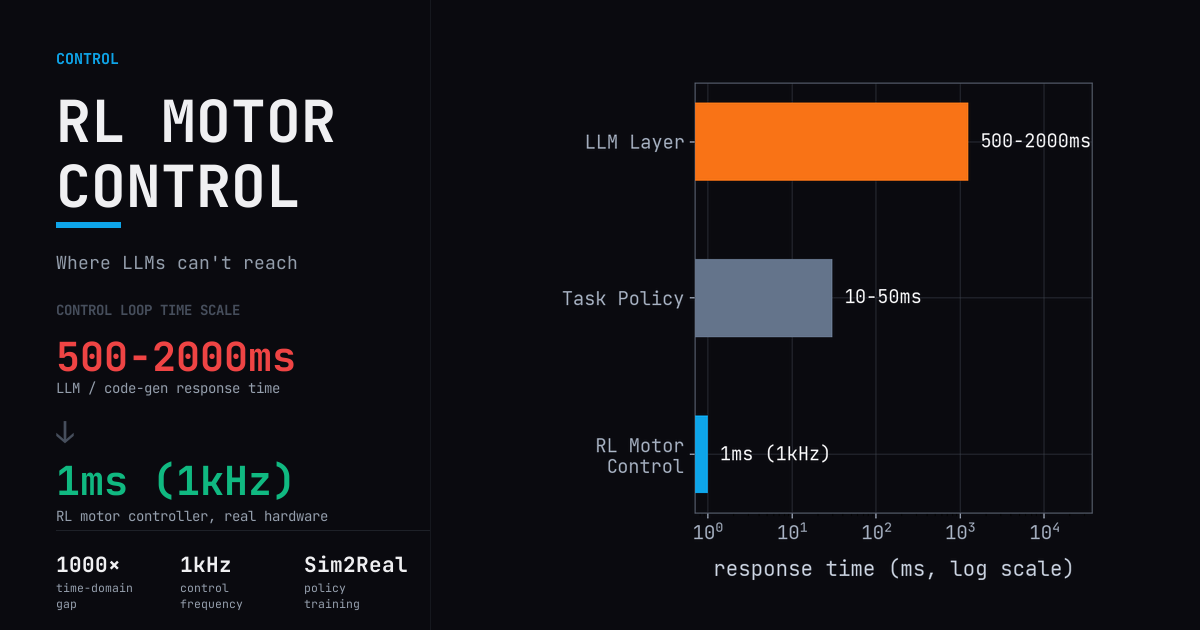
In the domain of 1kHz real-time motor control that LLMs cannot replace, we introduce WIM's approach to replacing traditional PID/ADRC manual tuning with reinforcement learning (RL).

What is the Real Cost of std::memory_order on ARM64? - Jetson Orin Benchmark

What is the Real Cost of std::memory_order on ARM64? - Jetson Orin Benchmark

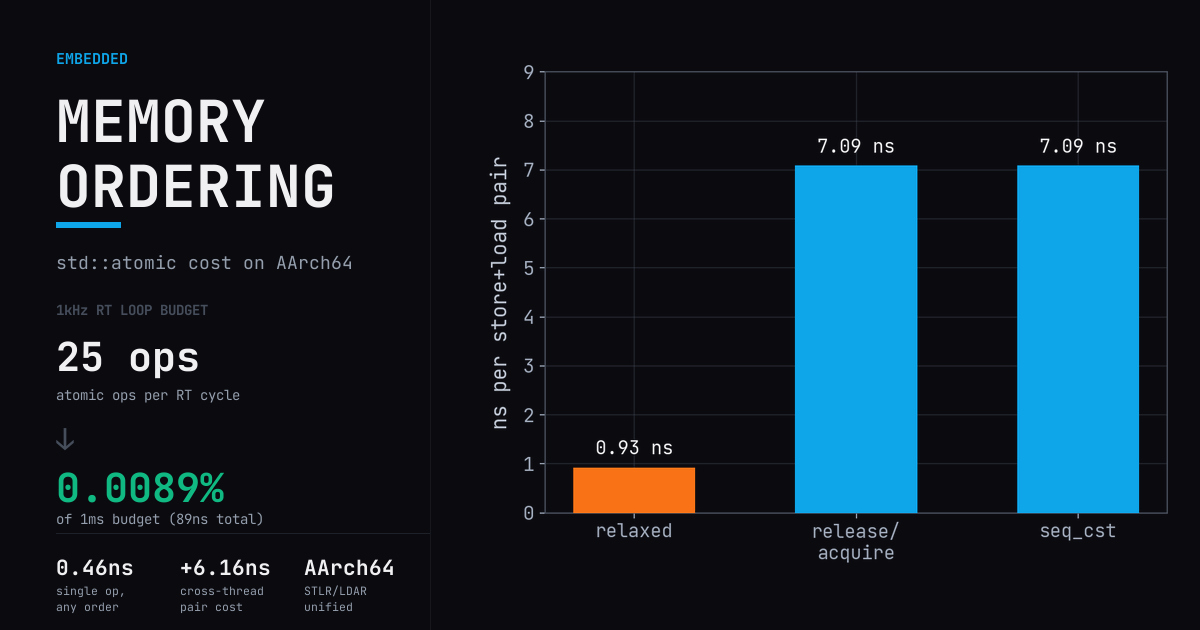
We measured whether atomic memory ordering could be a performance bottleneck in a 1kHz RT loop on Jetson Orin (Cortex-A78AE). On AArch64, the cost of seq_cst is virtually identical to release/acquire, and the total cost of 25 atomic operations is less than 0.01% of the 1ms budget.

The Evolution of Template Matching: From Pixel-Based to Deep Learning

The Evolution of Template Matching: From Pixel-Based to Deep Learning

An exploration of how template matching technology in computer vision has evolved from pixel-based methods through SIFT/ORB to SuperPoint/SuperGlue. Covers the principles, limitations, and use-case recommendations for each approach.

The Standard Language of Motor Control: CiA402 Profile

The Standard Language of Motor Control: CiA402 Profile

This article explains the CiA402 profile, the motor control standard for industrial robots based on EtherCAT and CANopen. It covers the state machine, Controlword/Statusword bit structures, and operation modes with practical examples.

About

About This Blog

WIM Inc. is building the future of industrial automation by integrating AI and Robotics technologies. In this blog, we share the technical challenges we face, our solutions, and the insights we gain.

Through field-tested technologies, in-depth analysis, and practical guides, we aim to help engineers in the AI and Robotics fields.

Newsletter

Get notified when new articles are published

No spam, only technical content